

CAPABILITIES / OFFSHORE ENGINEERING
Engineering capability across the offshore project lifecycle.
Specialist assessment, numerical modelling and subsea engineering informed by environmental data and connected through an integrated approach.
OUR SPECIALISMS
Five complementary engineering disciplines
From environmental characterisation and hydrodynamic forcing through seabed response to infrastructure protection, stability and integrated design assessment.
01
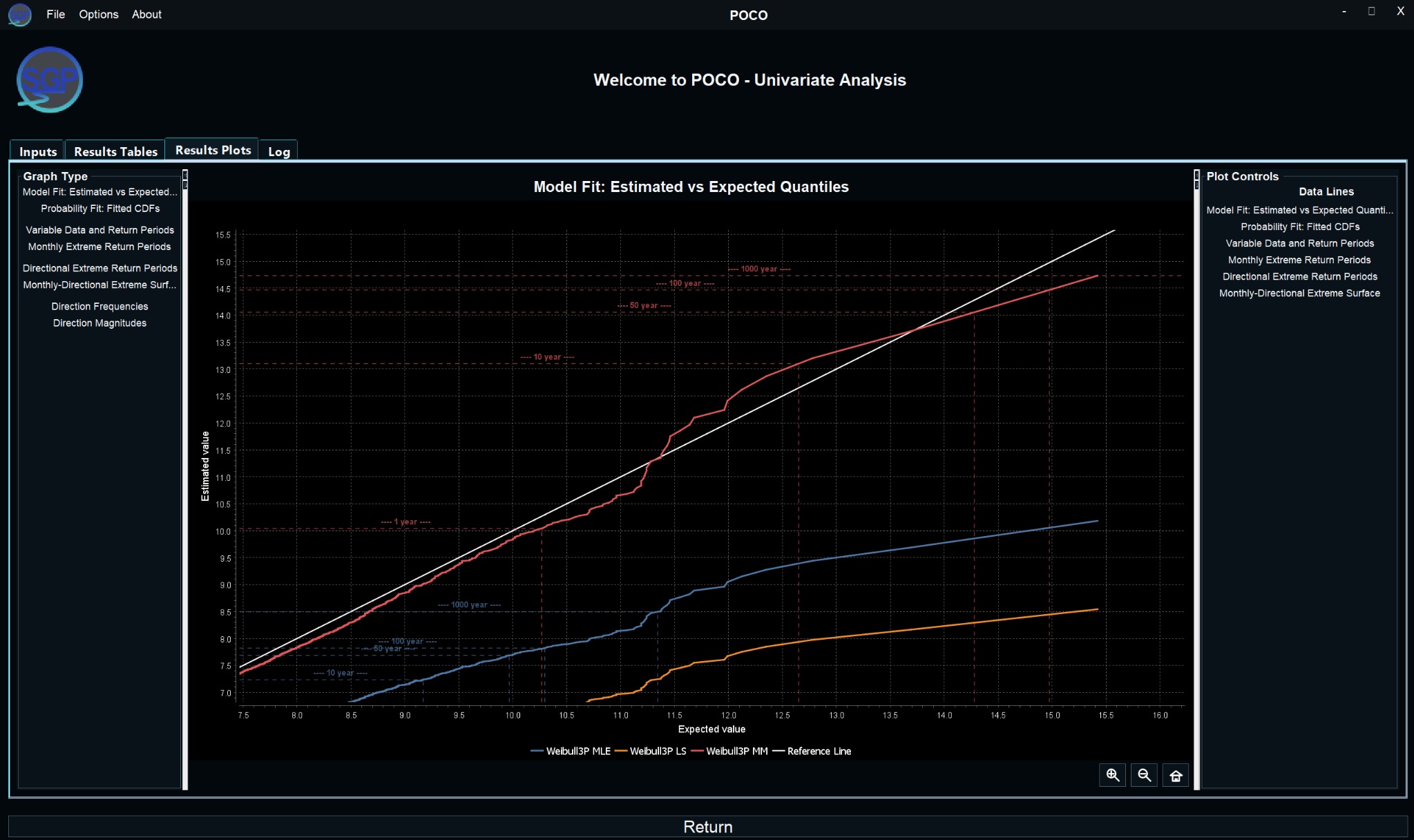
Metocean Assessment
Environmental characterisation and design conditions that underpin offshore engineering.
Operational and seasonal conditions
Extreme and joint environmental conditions
Design-point and location-specific assessments
02
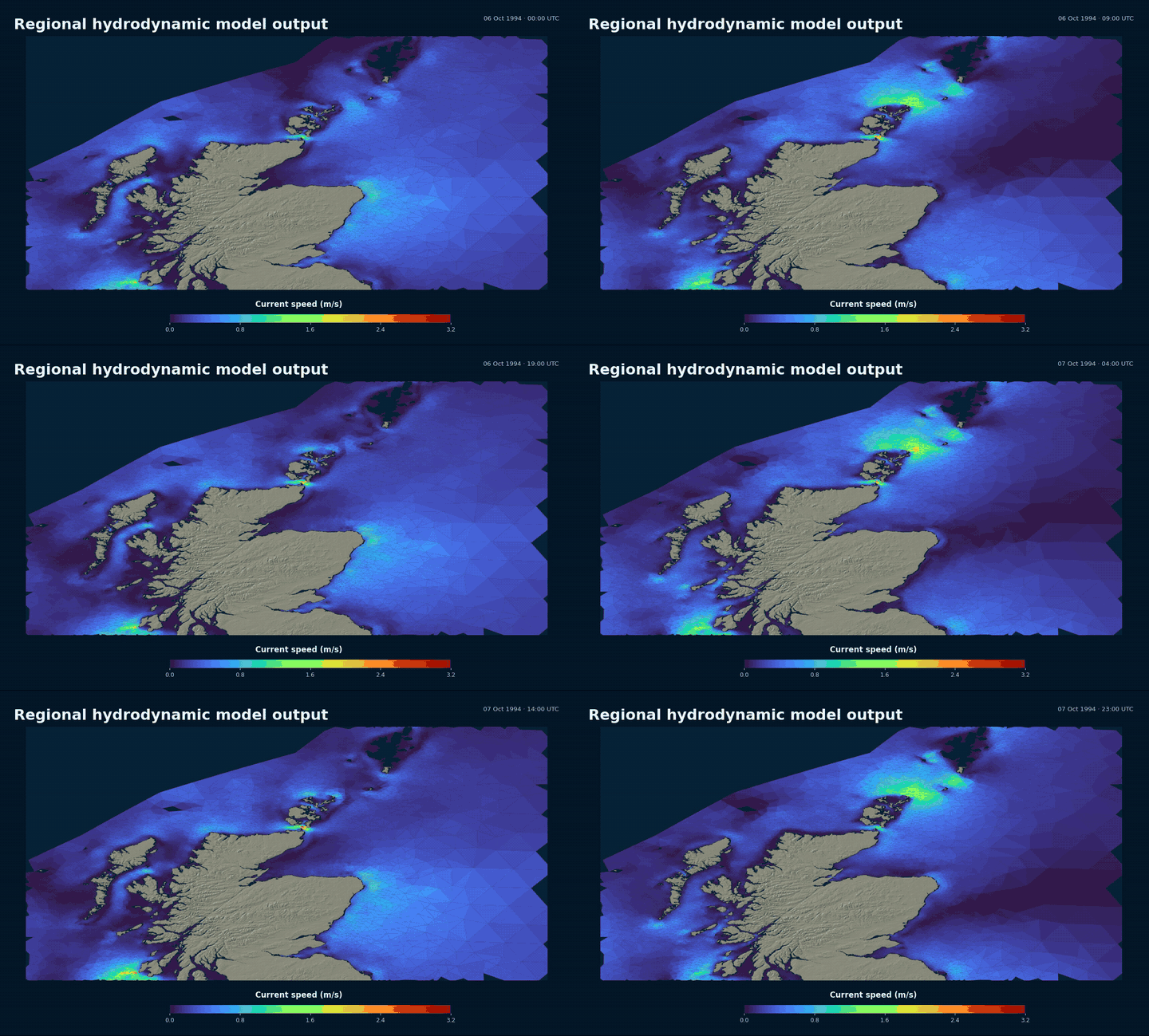
Hydrodynamics & CFD
Regional and local numerical modelling to understand flow and its interaction with infrastructure and the seabed.
Shelf-scale and local hydrodynamics
CFD of flow around marine structures
Observation comparison, verification and benchmarking
03
Seabed Mobility & Scour
Characterising evolving seabed levels and sediment movement, and their implications for offshore infrastructure.
Repeat bathymetry, dune migration and morphological change
Statistical seabed variability and NMRL assessments
Scour mechanisms, exposure and engineering design implications
04
Subsea Engineering & Protection
Design assessment for cables, pipelines, rock placement, scour protection and stabilisation measures under offshore environmental loading.
Cable and pipeline routing, on-bottom stability and burial
Subsea rock installation, berm geometry and hydraulic stability
Scour protection design; rock bag and mattress stability
05
Integrated Engineering Analysis
Connected assessment linking environmental forcing, seabed mobility and offshore infrastructure design through traceable evidence.
Environmental loading to design response
Joined-up spatial and numerical evidence
Transparent calculations and technical reporting
SPECIALIST SUBSEA DESIGN SERVICES
From changing seabed levels to engineered protection.
Specific engineering deliverables can combine survey evidence, environmental design conditions and analytical calculations. Scope, data availability, governing standards and assessment limitations are agreed for each application.
A
Seabed Mobility & NMRL
Spatial and statistical assessment of bed-level change to inform burial design and infrastructure integrity.
Repeat bathymetric surface comparison and dune migration
Seabed change envelopes, uncertainty and NMRL assessment
Exposure, free-span and route sensitivity to future bed levels
B
Scour Protection Design
Interpreting site hydrodynamics and local erosion mechanisms to size and assess scour mitigation.
Local scour and erosion mechanisms near structures
Rock grading, footprint and stability under design loading
Protection interfaces, potential edge effects and design assumptions
C
Subsea Rock Installation Design
Engineering rock protection arrangements that consider hydraulic performance and installation constraints.
Rock berm sizing, geometry and grading
Installation method, tolerances and asset interfaces
Protection for cable crossings, exposed assets and foundations
D
Rock Bag & Mattress Stability
Checking submerged protection units under current- and wave-induced loads.
Submerged weight, drag, lift and friction inputs
Sliding, uplift and overturning checks as applicable
Unit positioning, exposure and design-case sensitivity
THE SGP APPROACH
Environmental context. Engineering judgement. Traceable evidence.
System-Wide Perspective
We solve your engineering challenges, keeping the full project in perspective. Comprehensive solutions de-risk the wider projects ensuring compatible results integrated with your offshore project.
POCO-enabled delivery
SGP uses POCO to connect spatial project information, metocean inputs, hydrodynamics and engineering calculations within one workflow. A state-of-the-art design software that expedites reliable project delivery.
APPLICATIONS
Engineering across marine infrastructure.
Offshore renewables
Environmental conditions, seabed interactions, hydrodynamic loading and supporting design assessments.
Cables and interconnectors
Route-related conditions, cable stability, burial, seabed mobility and scour considerations.
Ports and coastal assets
Local hydrodynamics, currents, infrastructure interfaces and marine engineering assessments.
Complex submerged structures
Detailed geometry-led flow analysis and numerical investigation of interactions around structures.
HAVE AN OFFSHORE ENGINEERING CHALLENGE?
Discuss the problem before choosing the tool.
Share the project setting, available data and the engineering decision you need to make.
